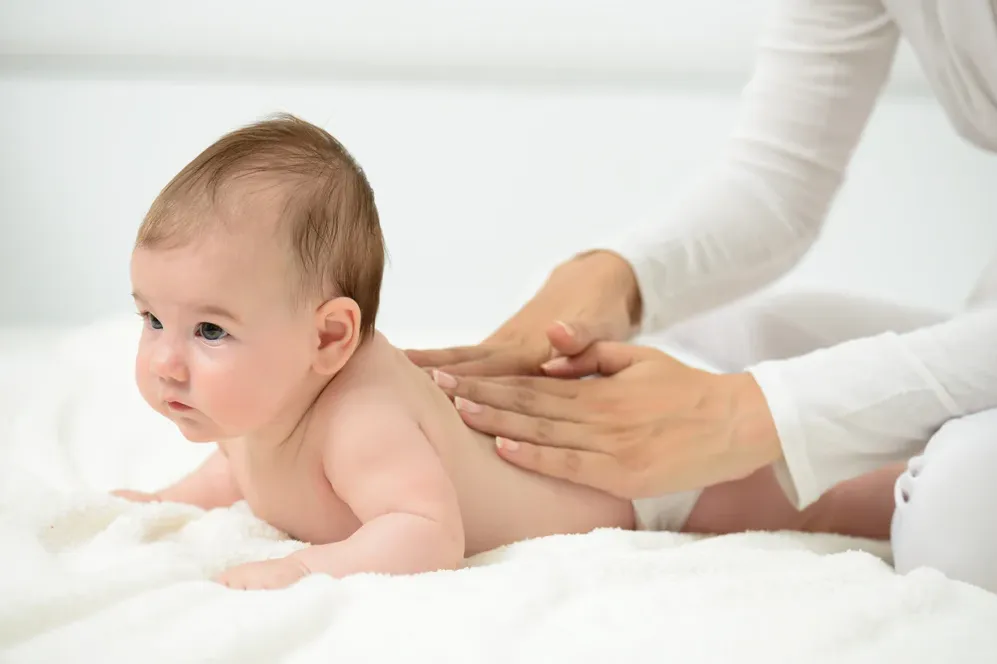
Parents understand that infant massage has health benefits. The skin of a newborn baby is delicate, their skull is still soft, and the little body is still growing outside the womb. It’s normal for parents to wonder if a massage is too much for newborns to handle.
A gentle massage can help babies sleep better, aid digestion, improve circulation, relax their nervous system, and enhance parent-child bonding.
Newborn massage benefits depend on two factors: the oil used and the pressure applied. This guide explains how to massage a newborn baby with oil during the first three weeks after birth.
Why is Massaging a Newborn a Different Experience from Massaging An Infant?
A newborn’s skin barrier is still developing. The outer layer of the skin (stratum corneum) is present at birth, but it can take weeks for the skin barrier to mature. During this time, key functions like hydration, transepidermal water loss (TEWL), and skin pH are still adjusting as your baby transitions from the protected environment of the womb to the outside world.
Massage gently stimulates pressure receptors in your baby’s skin, helping to activate calming nerve signals and ease stress. Since newborns are still adjusting to the outside world, it’s important to use soft, controlled pressure to keep the experience soothing and safe.
Why Should You Choose Safe Oil Massage for Newborns?
The massage oil used during the newborn stage affects how the maturing skin barrier responds to the environment. Neonatal skin has full-thickness with a developing barrier. Studies demonstrate that sunflower seed oil enhances barrier recovery within an hour (for preterm babies), while mustard, olive, and soybean oils slow it down.
This is largely due to linoleic acid, which supports the maturation of skin cells, helps build natural protective oils, strengthens the skin barrier, and reduces moisture loss. For best results, choose a lightweight oil that absorbs easily and allows for a smooth, gentle massage.
How to Get Ready for a Newborn Baby Massage with Oil?
Many parents searching for how to massage a newborn baby with oil want to know when to start the massage. It can usually start within the first few days after birth, provided your baby is healthy and settled at home. But all parents should consult a paediatrician prior to beginning baby massage. Here are a few tips to prepare for the newborn oil massage:
- Avoid the umbilical stump area until it is completely healed.
- Before you begin, trim your fingernails and wash your hands.
- Choose a time when the infant is relaxed and awake – not immediately after feeding, crying, or about to sleep.
- Typically, a daily session of 10-15 minutes is enough, as massages that last between 5 and 45 minutes have been consistently associated with better developmental outcomes.
How to Massage a Newborn Baby with Oil?
Pressure adjustment is the first step in a baby oil massage. It has been reported that a medium-pressure massage stimulates skin receptors, which in turn calms the vagus nerve and relaxes babies Here’s how you can massage your newborn with oil:
- Start with legs and feet: From the thigh to the ankle, gently stroke down towards your baby’s foot to help them get used to the touch. Then continue with smooth strokes from shoulder to wrist. Lightly rubbing the palm helps build early sensory awareness and brain development.
- For the chest and stomach: Use gentle, outward strokes, sweeping from the center of the chest toward the ribs. On the belly, massage in soft clockwise circles, but avoid the belly button area until it has fully healed. For the back, place your baby on their tummy with proper head support, and use slow, downward strokes to keep the massage soothing and comfortable.
- Facial massage is optional: If performed, use a tiny amount of oil and lightly stroke from the brow outward with your fingertips, as babies can be sensitive in this area.
How to Know if Your Baby Enjoys the Massage
Often, parents just know when their baby is content. Calm breathing and open hands indicate the baby is enjoying the massage. Twitching, looking away, clenching fists, and arching back can all be signs that your baby is getting too worked up. If you see these, ease up on the pressure, pause, or check if the oil suits your baby. Massage also boosts feel-good chemical production and calms down the baby when you read the cues right
Conclusion
Newborn massage isn’t just a gentler version of baby massage. In the first 4 weeks, the skin barrier is still in the development stage, and the nervous system is highly pressure sensitive. Gentle and repeated touch during this period facilitates early physiological regulation and enhances the connection between baby and parent. Using a plant-based formula like AreoVeda Baby Massage Oil can support a developing skin barrier in the newborn and help with delightfully soft and nourished skin as you massage daily.
