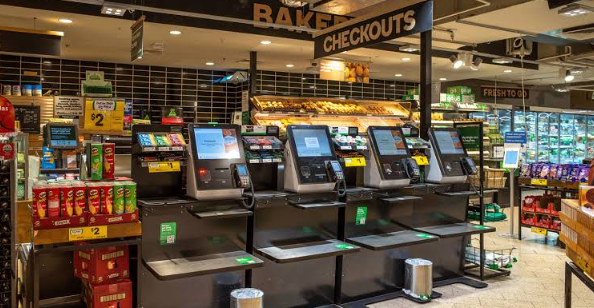
Walk into almost any large grocery store today and you’ll find at least a few lanes dedicated to customers scanning and bagging their own items. What started as a big-box retail trend has steadily made its way into smaller grocery and convenience stores too. Before investing in Self-Checkout Kiosks, it’s worth understanding exactly what these systems solve well, and where they still fall short for smaller operations.
The Core Appeal for Busy Stores
Self-checkout exists primarily to reduce wait times during peak hours. A customer buying a handful of items doesn’t want to stand behind someone with a full cart, and giving shoppers the option to scan their own small purchases keeps traditional lanes free for larger orders. For convenience stores with a steady stream of quick, low-item purchases, this can meaningfully speed up the entire checkout experience.
See also: The Growing Influence of Voice Assistants in Everyday Life
Labor Considerations, Realistically
Self-checkout doesn’t eliminate staffing needs the way some owners initially assume. Kiosks still require an attendant nearby to handle age-verification purchases, resolve scanning errors, and deter theft. What changes is the ratio, one employee can typically oversee four to six kiosks rather than working a single traditional register, which does free up staff for other tasks during quieter periods.
Loss Prevention Concerns Unique to Self-Checkout
Unmonitored self-checkout is a well-documented source of shrink, whether through accidental scanning mistakes or deliberate under-ringing. Weight-verification scales built into the bagging area, along with clear camera coverage and an attentive attendant, go a long way toward closing this gap without requiring you to abandon the self-checkout concept entirely.
Some retailers also find it useful to route a small percentage of self-checkout transactions through a random recount step, similar to a receipt check at a warehouse club exit. This doesn’t need to feel punitive to customers when framed clearly as a routine, occasional process rather than a targeted accusation.
Integrating Kiosks With Loyalty and Fuel Programs
Many convenience stores tie loyalty points or fuel discounts to specific purchases, and self-checkout kiosks need to handle these programs just as smoothly as a staffed register would. A customer scanning their loyalty card at a kiosk should see the same discounts and point accumulation they’d get from a cashier, without an attendant needing to manually apply anything on their behalf.
This matters more than it might seem, since a clunky loyalty experience at self-checkout can quietly discourage participation in a program that otherwise drives meaningful repeat business. Testing this specific workflow before a full rollout is worth the extra time it takes.
Which Product Categories Work Best
Packaged goods with clear barcodes scan easily and cause few problems at self-checkout. Produce sold by weight, age-restricted items like alcohol and tobacco, and loose or bulk goods create more friction, often requiring staff intervention anyway. Many stores find the best results by encouraging self-checkout primarily for straightforward, barcoded purchases while keeping traditional lanes fully staffed for everything else.
Customer Experience Trade-Offs
Not every shopper wants to bag their own groceries, and older or less tech-comfortable customers in particular may find self-checkout kiosks frustrating rather than convenient. Keeping a healthy mix of traditional and self-service lanes, rather than pushing customers exclusively toward kiosks, tends to keep more of your customer base satisfied across different age groups and comfort levels.
Sizing the Investment for a Smaller Store
A convenience store doesn’t need a bank of a dozen kiosks the way a large supermarket might. Even two or three units, positioned near the entrance for quick in-and-out purchases, can meaningfully reduce line congestion during a busy commuter rush without requiring the footprint or staffing overhead of a full self-checkout bank.
Getting the Rollout Right
Introduce self-checkout gradually rather than switching every lane overnight. Staff need time to learn how to troubleshoot common kiosk issues, and customers need a period to get comfortable with the new option before you rely on it heavily during your busiest hours. A soft launch during a slower week tends to surface problems before they affect a high-traffic Saturday.
Collecting quick, informal feedback from both staff and customers during this trial period is worth the small effort involved. Frontline employees often notice friction points, like a confusing prompt or an awkward bagging area layout, well before those issues show up in any formal report.
Wrapping Up
Self-checkout isn’t a universal fix for every line problem, but for grocery and convenience retailers dealing with a steady flow of quick purchases, it can meaningfully improve the customer experience when implemented thoughtfully. Weigh the loss prevention considerations honestly, start small, and expand based on how your specific customer base actually responds. What works well for a downtown convenience store with mostly quick, single-item purchases may look quite different from the right setup for a suburban grocery store handling larger weekly shopping trips.
