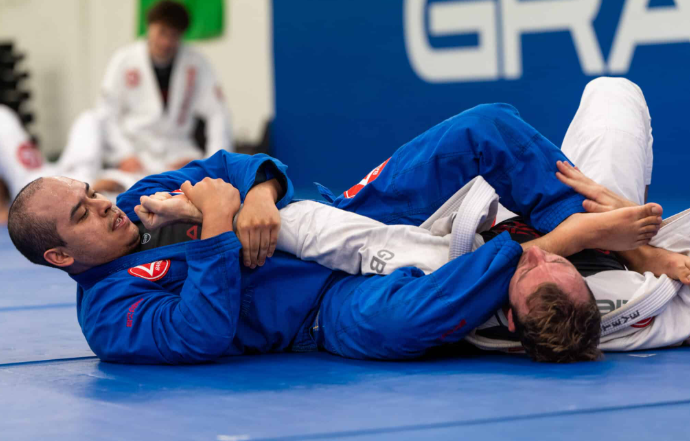
Starting Brazilian Jiu-Jitsu can feel exciting, challenging, and slightly intimidating at the same time. If you have never trained before, the terminology, movements, close-contact practice, and unfamiliar positions can make the first few classes seem overwhelming. The good news is that feeling confused in the beginning is completely normal.
Your first month is not about becoming an expert or learning dozens of submissions. It is mainly about becoming comfortable on the mats, understanding basic positions, learning how to train safely, and developing the habit of attending consistently.
For anyone searching for brazilian jiu jitsu near me, knowing what to expect during the first month can make the decision to start training much easier.
Your First Class Will Probably Feel Different
Brazilian Jiu-Jitsu is different from many traditional workouts because you are learning physical skills while working with another person.
A typical class may include:
- A warm-up
- Movement drills
- Technique instruction
- Partner practice
- Positional exercises
- Controlled sparring or rolling
- A short review or cool-down
The exact structure varies between academies, so your first class may look different from someone else’s experience.
The important thing is not to worry about understanding everything immediately. You are entering a completely new learning environment, and your body needs time to become familiar with the movements.
Week One: Getting Comfortable on the Mats
The first week is mostly about orientation.
You may learn basic movements such as bridging, hip escapes, technical stand-ups, or other foundational exercises. Your instructor may also introduce positions such as guard, mount, side control, or back control.
At first, the names may sound confusing.
You may also notice that experienced students seem to move naturally while you have to think about every step. This is normal. They have simply had more practice.
Your first-week goals should be simple:
- Learn the basic class routine
- Listen carefully to your instructor
- Learn how to tap safely
- Practice fundamental movements
- Become comfortable training with a partner
- Avoid worrying about advanced techniques
You do not need to impress anyone during your first week.
Understanding the Tap Is Essential
One of the most important things a beginner should learn is how and when to tap.
In BJJ, tapping is a normal part of training. It tells your training partner that you want them to stop the technique or release pressure.
A tap can be physical or verbal, depending on the situation and the academy’s safety practices.
The important rule is simple: do not wait until you are in significant pain before tapping.
Tapping is not a sign that you are weak. It is a normal safety mechanism that allows both people to train again.
Week Two: The Positions Start Making More Sense
During the second week, some of the unfamiliar terminology may begin to sound more familiar.
You may start recognizing the difference between being on top and being underneath your opponent. You may also begin understanding why certain positions are considered stronger or more difficult to escape from.
Instead of seeing every movement as completely random, you may start noticing patterns.
For example, you might begin to understand that when someone controls your position, your first goal may be to create space, improve your position, or recover a safer position.
This is an important change because BJJ is not simply about memorizing techniques. It is also about understanding what is happening.
You Will Probably Forget Many Techniques
One of the most frustrating parts of the first month is realizing that a technique you understood perfectly during drilling may suddenly disappear when you are rolling.
This happens to many beginners.
During instruction, you have time to watch the movement and copy each step. During live practice, however, everything happens more quickly.
You may forget:
- Which grip to use
- Where your legs should go
- Which direction to move
- What step comes next
- Which escape you practiced earlier
That does not mean you are failing.
Your brain is still learning how to recognize situations and connect techniques with movement. With repeated practice, familiar positions and movements become easier to remember.
Week Three: Start Thinking About Position
By the third week, you may be able to recognize several basic positions more quickly.
This is when it becomes useful to ask yourself simple questions during training.
Where am I?
Am I in a safe position or a difficult one?
What is my partner trying to accomplish?
What can I do to create space or improve my position?
These questions can help make rolling less overwhelming.
Instead of trying to remember every technique you have ever learned, focus on one or two simple objectives during each round.
For example, you might decide that your goal is to recover guard once or escape from side control.
Small goals make progress easier to notice.
Week Four: Training Starts to Feel More Familiar
By the fourth week, you probably will not suddenly become an advanced BJJ practitioner. However, the training environment may begin to feel less strange.
You may know where to stand during demonstrations, understand more of the terminology, and feel more comfortable partnering with other students.
You may also notice small improvements in your movement.
Perhaps you can escape a position that previously felt impossible. Maybe you are breathing more calmly during a difficult round. You might remember a technique without needing the instructor to demonstrate it again.
These small improvements are meaningful.
Your Body May Need Time to Adapt
BJJ uses movements and muscle groups that some beginners may not be accustomed to using.
During the first few weeks, you may experience normal tiredness or muscle soreness after training.
Your hands, forearms, hips, shoulders, neck, and legs may feel more tired than expected depending on the type of training you are doing.
This is one reason beginners should avoid trying to train at maximum intensity every day.
Give your body time to recover, especially if you are new to regular exercise.
If you experience significant pain, an injury, dizziness, or another concerning symptom, stop training and seek appropriate medical advice.
You Do Not Need to Be Extremely Fit Before Starting
Many people delay trying BJJ because they believe they need to get in shape first.
You do not need to reach a particular fitness level before attending a beginner class.
Your fitness can improve as you train.
At the beginning, you may become tired quickly because BJJ involves constant movement, tension, and concentration. As you become more familiar with the activity, you may learn to move more efficiently and avoid wasting energy.
The goal is not to prove how fit you are on your first day.
The goal is to begin learning.
Avoid Using Strength for Everything
Beginners often rely heavily on strength because they do not yet know how to use technique efficiently.
It is understandable. When someone controls your movement, your first instinct may be to push, pull, or struggle as hard as possible.
However, constantly using maximum strength can make you tired very quickly.
BJJ is based heavily on positioning, leverage, timing, balance, and technique.
As you gain experience, you can learn to use physical effort more efficiently.
Learn to Breathe and Stay Calm
One of the biggest challenges for beginners is learning how to remain calm when someone is applying pressure.
It is common for new students to tense their entire body or hold their breath when they feel trapped.
This can make you tired very quickly.
Try to focus on steady breathing and controlled movement.
You do not need to solve the entire situation immediately. First, understand where you are and identify the next small step.
Learning to stay calm can become one of the most useful skills you develop during your first month.
Good Training Partners Make a Difference
Your training partner can have a major influence on your beginner experience.
Experienced students often understand that beginners need time to learn. A good training partner should allow you to practice while maintaining appropriate control and safety.
You should also communicate.
It is completely acceptable to tell someone:
“I am new to BJJ.”
This gives your partner useful information and can help them adjust their approach.
If something feels unsafe or unclear, speak to your instructor.
Hygiene and Mat Etiquette Matter
BJJ involves close physical contact, so personal hygiene is especially important.
Before training, beginners should generally make sure they are clean and ready for physical contact. Keeping fingernails and toenails trimmed is also important.
Depending on the academy, you may train in a gi or no-gi clothing.
Other basic habits include:
- Remove jewelry before training
- Keep training clothing clean
- Bring water
- Follow the academy’s mat rules
- Keep cuts or skin issues properly covered according to gym policy
- Avoid wearing clothing with hard or sharp parts
- Follow instructor directions about equipment
Good hygiene helps create a more comfortable environment for everyone.
How Often Should a Beginner Train?
There is no single schedule that works for everyone.
For many beginners, training around two or three times per week can provide a useful balance between learning and recovery. The most important thing is consistency.
Training intensely for one week and then stopping for several weeks is unlikely to be as helpful as following a manageable schedule.
Consider your:
- Work or school schedule
- Current fitness level
- Recovery needs
- Family responsibilities
- Other physical activities
- Personal goals
Choose a schedule that you can realistically maintain.
What Should You Focus on Learning First?
During your first month, do not worry about collecting a huge list of submissions.
Instead, focus on fundamentals.
Useful areas include:
- Basic BJJ positions
- Safe movement
- Escaping uncomfortable positions
- Creating space
- Maintaining balance
- Basic guard concepts
- Understanding posture
- Learning how to tap
- Protecting yourself during training
- Staying calm under pressure
Once these foundations become familiar, more advanced techniques will have a context that makes them easier to understand.
What Progress Should Look Like After One Month?
Progress is not necessarily measured by how many people you can submit.
After a month, useful signs of progress might include:
- Feeling more comfortable entering class
- Understanding common BJJ terminology
- Recognizing major positions
- Remembering basic movements
- Breathing more calmly during rounds
- Knowing when to tap
- Becoming a better training partner
- Feeling less overwhelmed during rolling
- Attending consistently
You may still get submitted frequently. You may still forget techniques. You may still feel confused sometimes.
That is part of being a beginner.
Choosing a BJJ Academy
If you are searching for brazilian jiu jitsu near me, do not choose a training facility based only on distance.
The training environment matters.
Look for a place where beginners receive clear instruction and where safety and respect are taken seriously.
Consider asking about:
- Beginner class schedules
- Gi or no-gi requirements
- Trial class arrangements
- Training frequency
- Sparring expectations for beginners
- Safety procedures
- Instructor experience
- Class size
- Required equipment
A comfortable and supportive environment can make it much easier to stay consistent.
The First Month Is About Building a Foundation
It can be tempting to compare yourself with experienced students during your first month.
Try not to.
Someone who has trained for years will naturally understand positions and movements that are completely unfamiliar to you.
Instead, compare your current skills with where you were on your first day.
Maybe you understand one more position. Maybe you can escape something that previously confused you. Maybe you are less nervous about rolling.
Those are real improvements.
Conclusion
The first month of Brazilian Jiu-Jitsu is mainly about learning how the training environment works, becoming comfortable with basic positions, developing safe habits, and building consistency. You may feel confused, tired, or overwhelmed at times, but those experiences are normal for beginners.
If you are searching for brazilian jiu jitsu near me, focus on finding a supportive academy where instructors prioritize proper technique, safety, and beginner development.
Do not worry about mastering advanced submissions during your first month. Learn the basic positions, practice your movement, communicate with your training partners, tap when necessary, and keep showing up. With patience and consistent training, the techniques that initially seem confusing can gradually begin to make sense.
