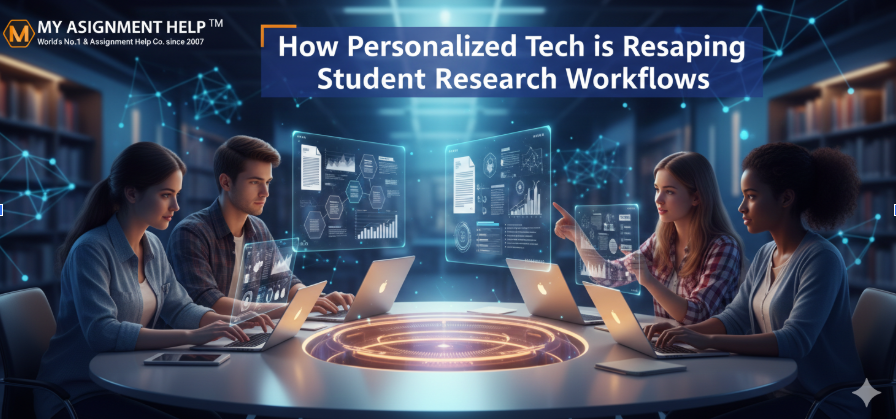
In the rapidly evolving landscape of higher education, the traditional student research workflow is undergoing a profound transformation. Gone are the days when research was solely a solitary, manual endeavor, painstakingly piecing together information from physical libraries and static databases. Today, personalized technology, especially the burgeoning field of Agentic AI, is not just assisting students but actively reshaping how they discover, synthesize, and present information. This shift is creating more efficient, targeted, and ultimately, more impactful research experiences for the modern US student.
The journey of academic research, from initial topic selection to the final submission of a well-crafted essay, is inherently complex. It demands critical thinking, rigorous analysis, and effective communication. As technology advances, students are increasingly leveraging sophisticated tools that offer personalized support, making the often daunting task of research more manageable. Whether it’s streamlining literature reviews or refining argumentation, these technological advancements provide a significant edge. In fact, many students find that navigating these complex academic demands can be significantly eased with expert guidance on academic writing, ensuring their work meets the highest standards of clarity and scholarship.
For US students, the integration of personalized tech is particularly impactful, reflecting the nation’s embrace of innovation in education. From personalized learning platforms that adapt to individual needs to AI-powered research assistants, these tools offer bespoke experiences that cater to diverse learning styles and research challenges. This isn’t about replacing human intellect; it’s about augmenting it, providing students with the power to delve deeper, manage information more effectively, and focus their energies on the higher-order cognitive tasks that truly matter in academic inquiry. Crafting an impactful academic piece also means knowing how to grab your reader from the first sentence, and understanding effective essay hook examples can be just as crucial as the research itself.
The Evolution of Research: From Manual to Machine-Augmented
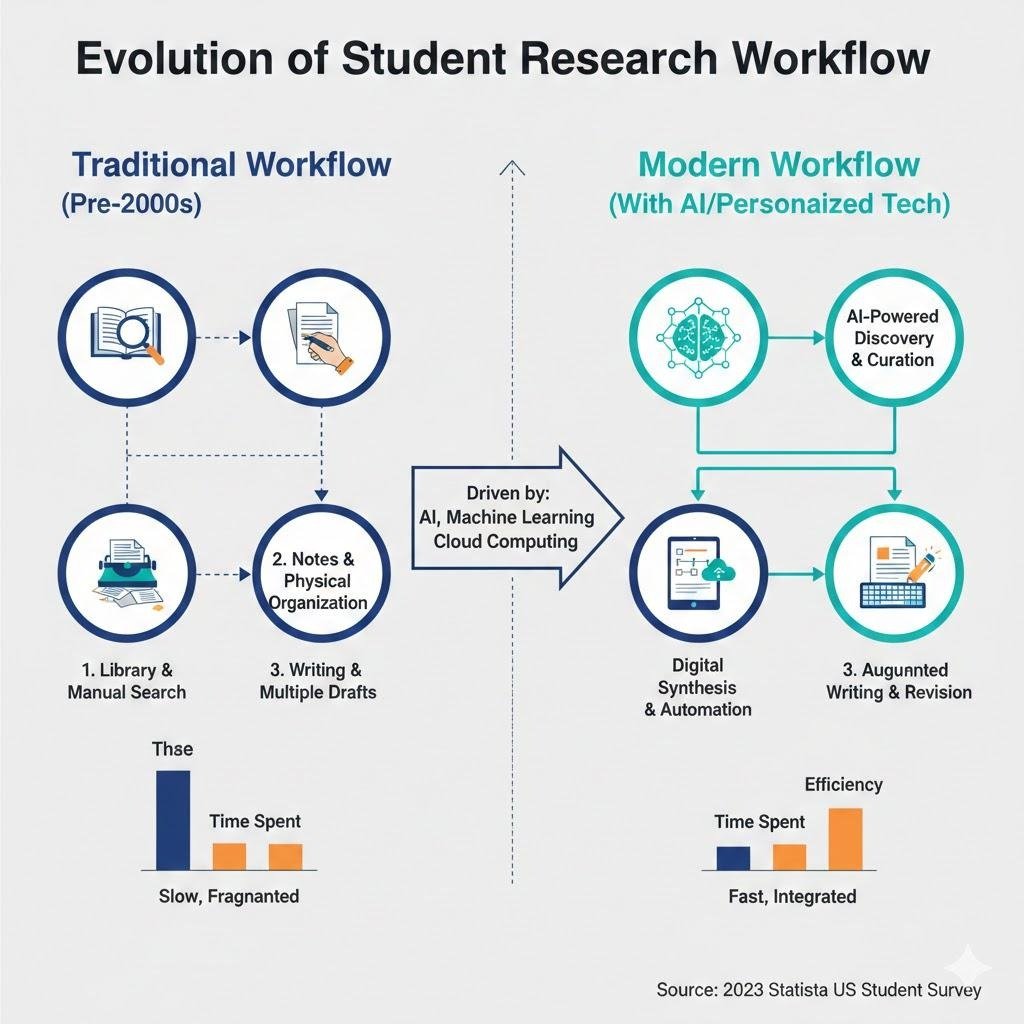
Historically, academic research was characterized by extensive time spent sifting through card catalogs, journal archives, and microfiches. The advent of the internet brought about a significant change, democratizing access to information. However, the sheer volume of digital data quickly created a new challenge: information overload. This is where personalized tech steps in, offering a tailored approach to information management and synthesis.
According to a 2023 survey by Statista, 84% of US students use digital tools for research, highlighting the pervasive nature of technology in contemporary academia. This isn’t just about using Google Scholar; it’s about employing intelligent agents that learn from a student’s research habits, preferences, and even their writing style to provide highly relevant and personalized assistance.
Agentic AI: The Next Frontier in Personalized Research
Agentic AI refers to artificial intelligence systems designed to perform specific tasks autonomously, learning from interactions and making decisions to achieve a defined goal. In the context of student research, these agents are transforming workflows in several key areas:
- Automated Literature Review and Synthesis:
- The Challenge: Students often spend countless hours sifting through academic papers, trying to identify relevant studies and synthesize findings.
- The Solution: Agentic AI tools can scan vast databases of academic literature, identify key themes, summarize complex papers, and even flag contradictory evidence. Tools like Elicit and Semantic Scholar use AI to find papers, extract data, and visualize connections, significantly reducing the initial discovery phase. This allows students to quickly grasp the intellectual landscape of their topic.
- Personalized Content Curation:
- The Challenge: Information overload makes it difficult to distinguish credible sources from less reliable ones.
- The Solution: AI agents can learn a student’s research interests and preferred academic journals, then proactively recommend highly relevant articles, datasets, and even experts in the field. These systems get smarter over time, providing increasingly tailored content streams that filter out noise and amplify signal.
- Dynamic Outline Generation and Structuring:
- The Challenge: Structuring a complex research paper can be daunting, especially for long-form essays or theses.
- The Solution: AI-powered outlining tools can suggest logical structures based on the student’s topic, identified themes, and even their accumulated research notes. They can help organize arguments, ensuring a coherent flow and identifying potential gaps in reasoning before the writing even begins.
- Data Analysis and Visualization Assistance:
- The Challenge: Interpreting large datasets and creating compelling visualizations requires specialized skills.
- The Solution: For students working with quantitative data, AI tools can assist in identifying trends, performing statistical analysis, and generating visual representations like charts and graphs. While human interpretation remains paramount, these tools accelerate the analytical process and improve presentation quality.
- Ethical Sourcing and Plagiarism Detection:
- The Challenge: Ensuring proper citation and avoiding accidental plagiarism is a constant concern.
- The Solution: Personalized tech can integrate advanced plagiarism detection features that go beyond simple text matching, analyzing sentence structure and semantic similarity. Furthermore, citation management tools, often enhanced with AI, can automate the generation of bibliographies in various academic styles, drastically reducing errors and ensuring ethical sourcing.
See also: The Rise of Agentic AI: How Personalized Tech is Reshaping Student
Enhancing, Not Replacing: The Human Element Remains Key
It’s crucial to understand that personalized tech and Agentic AI are designed to enhance human capabilities, not replace them. While AI can draft summaries or identify themes, the critical evaluation, nuanced argumentation, and original thought still rest squarely with the student. The technology acts as a powerful co-pilot, handling the tedious and repetitive tasks, thereby freeing up students to focus on:
- Deep Critical Thinking: Analyzing complex ideas, challenging assumptions, and developing unique perspectives.
- Creative Problem Solving: Formulating innovative research questions and finding novel solutions.
- Ethical Reasoning: Considering the implications of their research and adhering to academic integrity.
- Refined Argumentation: Developing sophisticated arguments and supporting them with compelling evidence. This is where the subtleties of language and structure, often honed through professional essay help, truly shine.
The shift towards personalized tech in research workflows underscores a broader trend in education: the move towards individualized learning paths and competency-based models. As these tools become more sophisticated, they will continue to empower US students to conduct higher-quality research with greater efficiency, ultimately leading to a more profound and engaging academic experience.
Key Takeaways
- Personalized Tech is Transforming Research: Modern tools, especially Agentic AI, are making student research more efficient, targeted, and impactful.
- Augmenting Human Intelligence: These technologies assist with literature reviews, content curation, outlining, and data analysis, freeing students for higher-order thinking.
- Efficiency and Accuracy: AI helps in identifying relevant sources, summarizing content, and ensuring proper citation, reducing time spent on tedious tasks.
- Human Element is Crucial: Despite technological advancements, critical thinking, original argumentation, and ethical reasoning remain the sole domain of the student.
- Future of Education: This trend aligns with individualized learning, preparing students for a tech-driven professional world.
Frequently Asked Questions (FAQ)
Q1: What is Agentic AI in the context of student research?
A1: Agentic AI refers to AI systems that can perform specific research-related tasks autonomously, such as summarizing articles, curating content, or generating outlines, learning and adapting to a student’s needs over time.
Q2: Will personalized tech make students reliant on AI for thinking?
A2: No, the goal of personalized tech is to augment, not replace, human intelligence. It handles repetitive tasks, allowing students to focus on critical thinking, analysis, and original argumentation, which are still essential academic skills.
Q3: How does personalized tech help prevent plagiarism?
A3: Many AI-powered tools include advanced plagiarism detection features that analyze text for originality. Additionally, smart citation management tools automate bibliography creation, reducing errors that could lead to accidental plagiarism.
Q4: Is this technology only for advanced students?
A4: While some advanced tools might have a learning curve, many personalized research technologies are designed to be user-friendly and beneficial for students across all academic levels, from undergraduates to doctoral candidates.
Q5: Where can I find additional support for refining my research and writing skills?
A5: Alongside leveraging personalized tech, seeking professional academic support can significantly enhance your research and writing. Services like those offering expert guidance on academic writing can provide tailored feedback and assistance.
About the Author
Alex Sharma is a Senior Academic Consultant and Content Strategist at MyAssignmentHelp.com, with over a decade of experience in educational technology and professional academic support. Holding an M.A. in Educational Technology from a leading US institution, Alex specializes in providing high-level assignment help by teaching students how to leverage digital tools and effective research methodologies to excel in their studies. Alex is passionate about integrating innovative tech solutions with foundational academic principles to foster a new generation of informed and efficient scholars. Alex’s insights have been regularly featured in various educational publications, emphasizing the ethical, data-driven, and effective use of technology in modern academic endeavors.